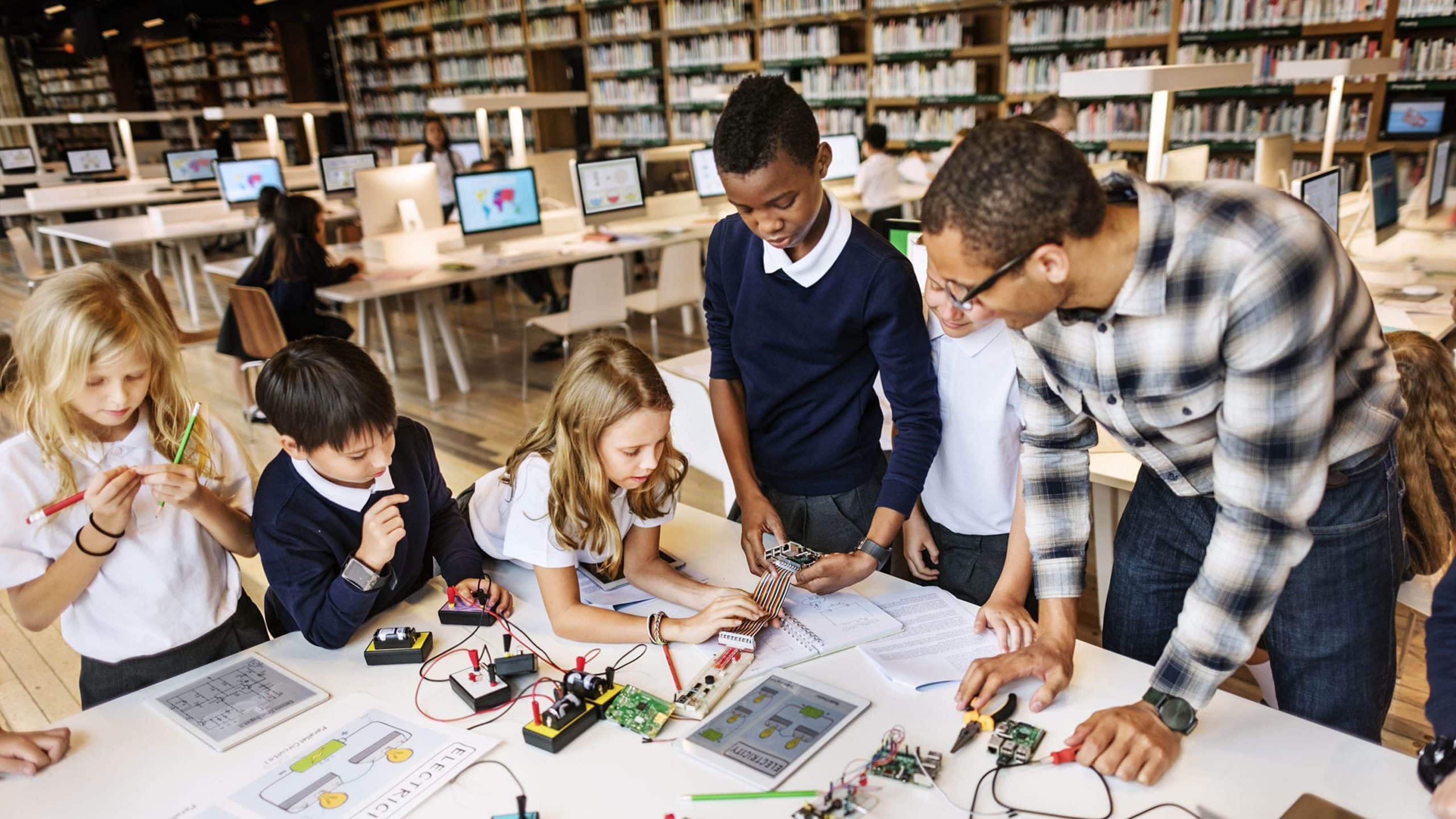
在STEM课堂中教授示范行为

什么是STEM教育

Teachers can utilise social and emotional learning frameworks to help students address ethical issues surrounding new technology.

Because we are bound by our subjects’ certainty and a battery of standardised tests, STEM instructors often reject everything that cannot be proven. As educators, we must not hide behind our content and avoid the thorny technological-ethical issues that arise from that content. Likewise, we want our future leaders and innovators to select wisely for all of us.


SEL SCAFFOLDING ETHICS

Many people mix up ethics and morality. However, the latter would entail imposing a particular value system on students—what is right and bad. The former helps students clarify and express their principles in situations that allow for diverse perspectives and actions.

Social and emotional learning (SEL) allows students to exercise ethical thinking and decision-making in a setting that compliments STEM knowledge. SEL theories vary, but all promote autonomy, agency, cognitive and emotional regulation, social skills and relationships, and civic spirit. Ethics can be addressed effortlessly alongside rigorous content knowledge.


IMPROVE STUDENT AUTHORITY

SEL teaches children that they are unique, sovereign persons who can make choices that affect their lives. Thus, Project-based learning (PBL) targets this SEL ability directly by offering students a voice and choice within collaborative teams.

Instead of “How can we build an AI application?” ask “How can we build an AI application that benefits humans?” This encourages students to examine the ethical aspects of their work and to express their opinions.


EMOTIONAL AND COGNITIVE REGULATION

This skill prepares pupils to be better students, coworkers and friends. When questioned on their beliefs, students can learn to formulate their arguments coherently and respond appropriately in a dialogue that allows many perspectives.

However, debates concerning the ethics of technology can be held in any class, PBL or not. These topics are relevant and full of ethical dilemmas that students can investigate while monitoring and controlling their logical thinking and emotional responses, as well as clarifying their personal values.

Teacher temperament and teaching style should be taken into consideration when current events are brought up in the classroom. So, from movies to podcasts to news articles, you may discover interesting argument subjects online. Discussions can take place in real time or asynchronously via digital technology.

Students can comment privately in journals or openly in class. Discussions might be informal or moderated. Regardless of their perspective, kids benefit from thinking about their values and expressing them respectfully in a classroom community marketplace of ideas.


IMPROVING SOCIAL SKILLS

To contribute to a varied community, students must build meaningful relationships with others. PBL’s collaborative team structure is ideal for students to practise their interpersonal skills. Participating in group discussions helps children learn to communicate, make decisions, resolve conflicts and express thanks.

Students can develop self-control, emotional management, social and interpersonal skills through PBL classes or current events discussions concentrating on tech ethics. Students develop SEL skills and clarify their ethical views in a pluralistic atmosphere.

LIFT PUBLIC SPIRIT

We need community. Social and emotional development of future leaders requires teaching children to care for and engage in their communities. They foster a sense of community. In the same way, that’s where PBL modules and current events discussions may help.

Assisting with difficulties and suggesting solutions directly affects their neighbours, from their families to the school bus driver or restaurant server.

Humanity faces a choice. From pandemics to AI, our challenges threaten our species’ survival. The solutions will be technological, but also ethical, and will require global cooperation. To assure a good future for the next generation, we must educate them in science, interpersonal skills, and ethics. STEM teachers can help students develop these traits.

分享:

相关文章

STEAM STEM 教育概念标志

这就是为什么投资 STEAM 和编程应该成为你的首要任务。

教育经费永远都不够用。人力、时间或其他资源也可能不够。因此,资金分配始终是一项挑战——我们需要在相互冲突但又都至关重要的优先事项之间取得平衡,从而最大限度地造福我们的孩子。本文将阐述为何要投资于STEAM教育。

赋能学生,使其发展学术认同感

Academic identity is fundamental to students’ performance and is based on how they see their own intelligence. Children are far more prone to disengage from their classes and believe they are of little value in academic settings if they are not given the tools to feel like valuable contributors to

为什么选择 Zoom 进行学习

尽管新技术改变了我们的日常生活,但它也可能使我们更加孤立。然而,如果使用得当,它们可以成为重新建立人与人之间联系的有效工具。2020年,Zoom超越TikTok、Disney+、YouTube甚至Instagram,成为下载量最高的应用程序。你准备好了吗?

虎数学

感谢您联系TigerCampus。我们将在1-2个工作日内与您联系。

与世界分享

[affiliate_conversion_script amount="15" description="免费试用弹窗" context="联系表单" status="unpaid" type="lead"]